How it works
What happens during a fire risk assessment
A specialist firm carries out the inspection, writes the report and explains what needs doing. You find out what matters, what does not, and what to do next about your home or workplace.
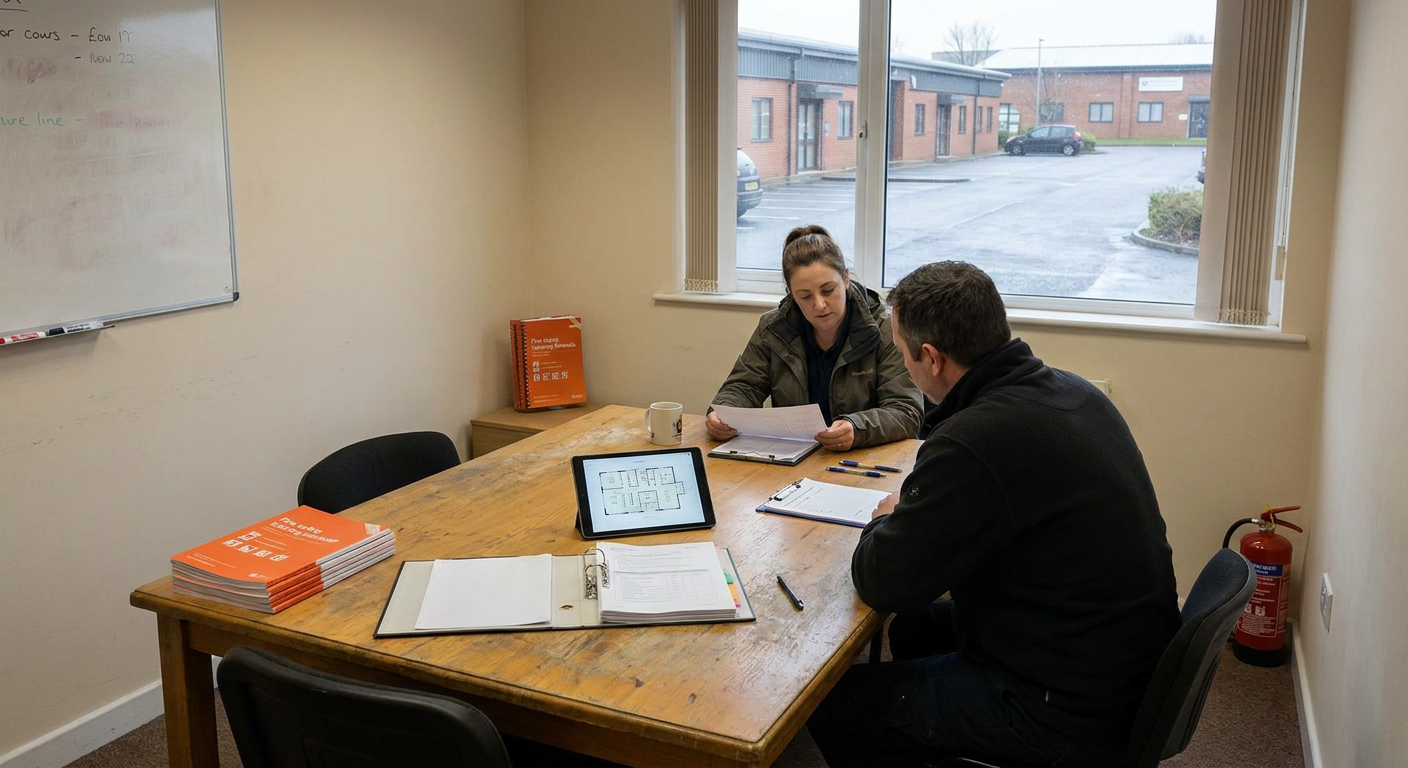
What shapes the work involved
Every building differs. The layout, how people use the rooms and what is already in place all change what the specialist needs to look at and record.
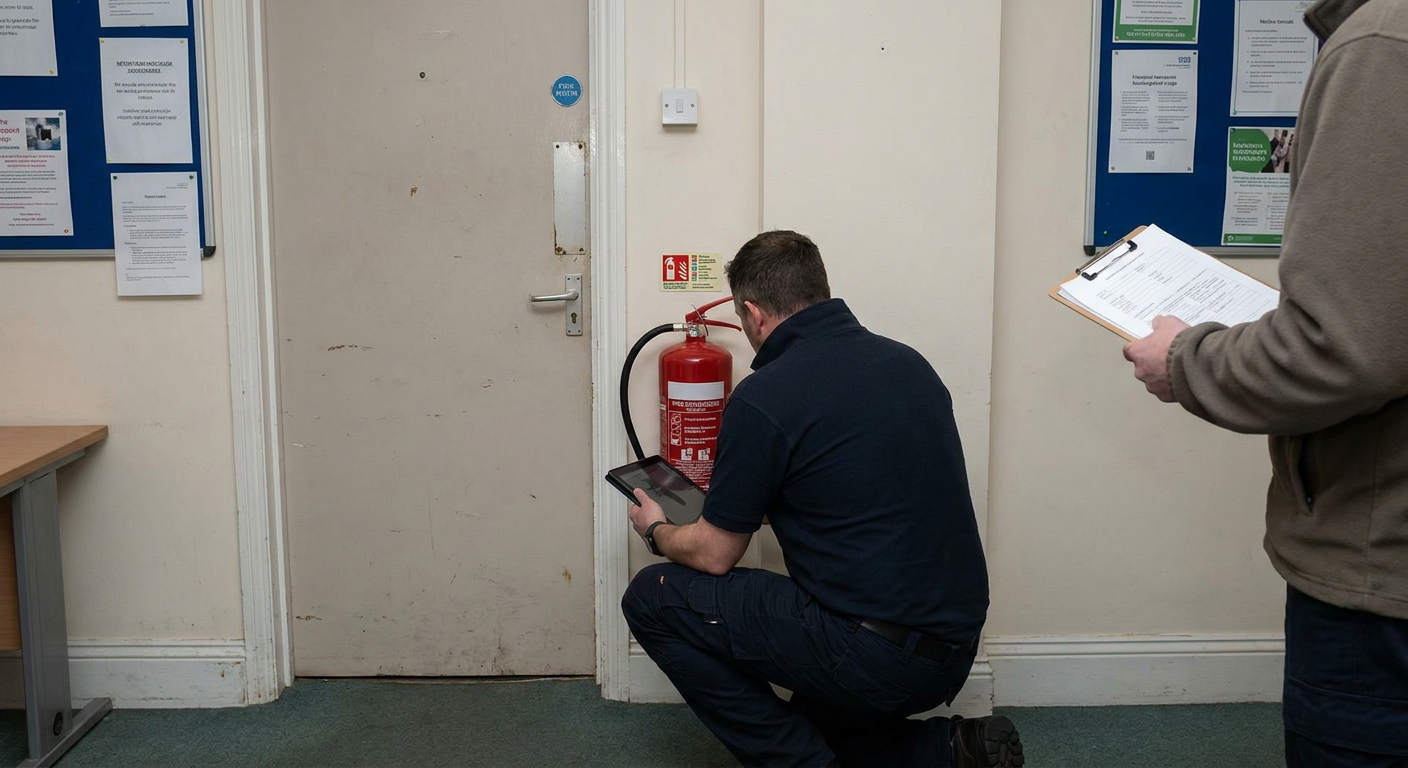
- Size and layout of the building
- More floors, separate wings or complex corridors mean more areas for the specialist to inspect and document.
- How the building is used
- A shared house with multiple tenants requires different checks from a single office or a ground-floor shop.
- Existing safety measures
- Where alarms, extinguishers or fire doors are already fitted, the specialist records their condition and tests them.
- Number of occupants
- More people living or working inside means evacuation routes and assembly points need closer attention.
The specialist sets out the cost for your particular building before any work begins.
What you receive after the visit
The specialist inspects the building, records what they find and applies fire safety regulations to it. You get written evidence of the risks and clear steps to manage them.
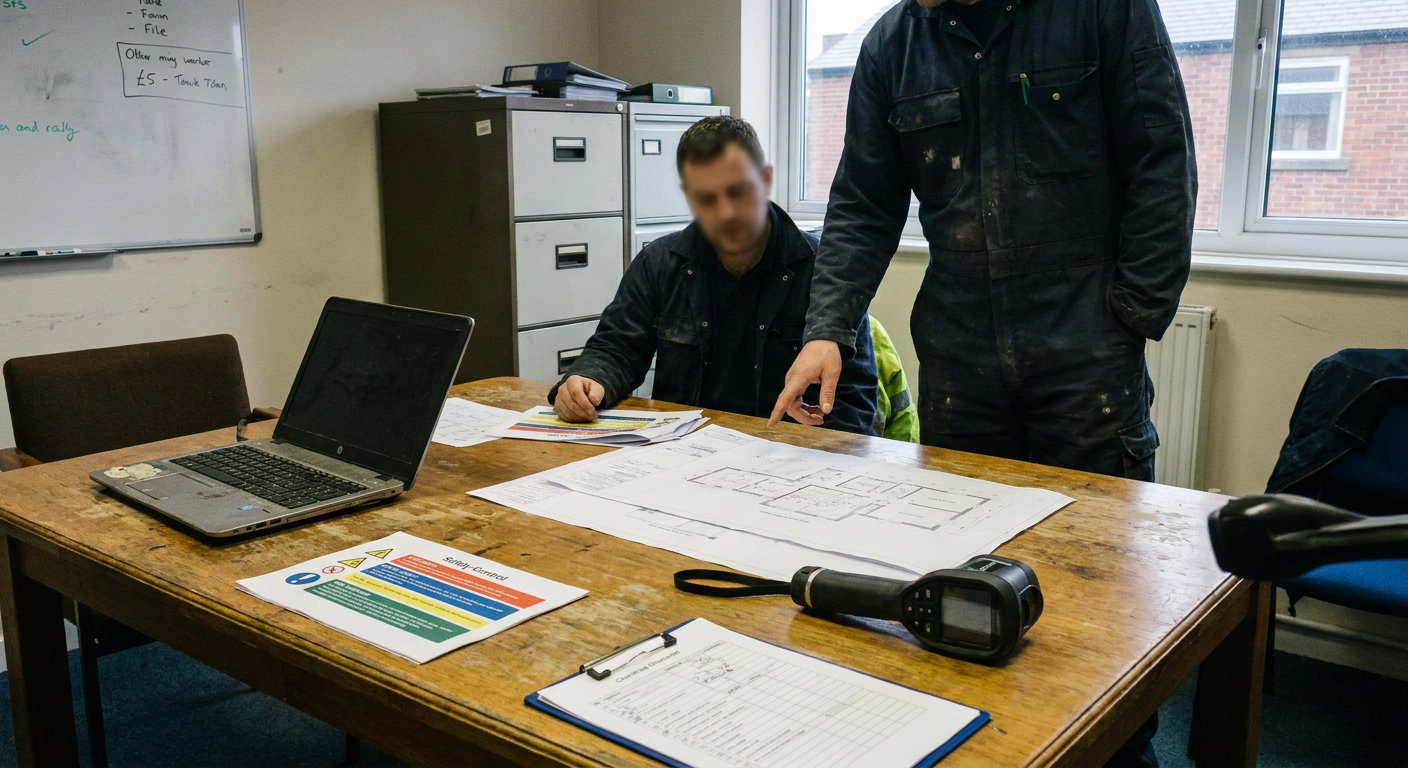
- Written assessment report
- A document listing each hazard found, who might be harmed and what action the responsible person should take.
- Action plan
- Steps ranked by urgency so you know which problems to fix first and which can wait for planned maintenance.
- Floor plans and escape routes
- Drawings showing exits, assembly points and the paths people should follow if the alarm sounds.
Questions people ask before getting in touch
If your question is not here, send it through the contact page. Send a question.
- Do I need a fire risk assessment for my home?
- Owner-occupied houses do not legally require one. But rented homes, flats in shared blocks and houses in multiple occupation do. If you let rooms or own a flat above a shop, the law places duties on you as the responsible person.
- How long does the visit take?
- A small flat or single office usually takes under two hours. Larger buildings with multiple floors, complex layouts or many tenants take longer because the specialist must check every room, corridor and exit route.
- Who arranges the assessment?
- The responsible person for the building does. That is usually the employer, landlord or managing agent. If you received a letter from the council, you should act on it promptly rather than waiting.
- How often should it be reviewed?
- There is no fixed expiry date, but the assessment must stay current. Review it after any significant change, such as new tenants, building work or a fire incident. Most specialists recommend checking it at least once a year.
- What happens if something fails the check?
- The report records the problem and explains what needs fixing. The specialist does not carry out repairs. They tell you what standard the door, wall or alarm must meet so you can arrange the right contractor.
- Can the same firm handle training too?
- Specialist firms provide awareness sessions and fire warden training separately from the assessment itself. Staff learn how to raise the alarm, evacuate safely and use extinguishers where appropriate.
Tell us what you need checked
Send details about your building and what has prompted your enquiry. The information goes to a specialist firm who will reply with what they suggest and what it involves. You are not committing to anything by asking.
- No obligation to proceed
- Local specialists only
- Plain answers