Fire safety articles
Fire safety articles and guides for Reigate buildings
Articles on alarms, doors, escape routes and the records worth keeping. Written for landlords, employers and building owners in Reigate who have noticed something wrong and want to know if it matters.
Alarms and weekly testing logs
A fire alarm that sounds once a week is easy to ignore. That is the problem. The weekly test exists so everyone in the building knows what the siren sounds like and where the nearest call point sits. If the test stops happening, people forget. When a real fire starts, hesitation costs time.
Landlords renting out homes around Reigate need working smoke and heat alarms on every floor. Battery-powered units drift out of date quietly. Mains-wired systems fail when the backup battery dies. A rented house without functioning detection leaves tenants exposed and the landlord liable. Read more about [smoke and heat alarms in rented homes around Reigate](/journal/smoke-and-heat-alarms-in-rented-homes-around-reigate) and why placement matters as much as the device itself.
Keeping a log of each weekly test proves the system works. A specialist firm can advise on what to record and how often a full service should happen. The [weekly fire alarm testing guide](/journal/weekly-fire-alarm-testing-in-reigate-checks-and-logs) sets out what those checks involve.
Doors, gaps and seals that stop fire spreading
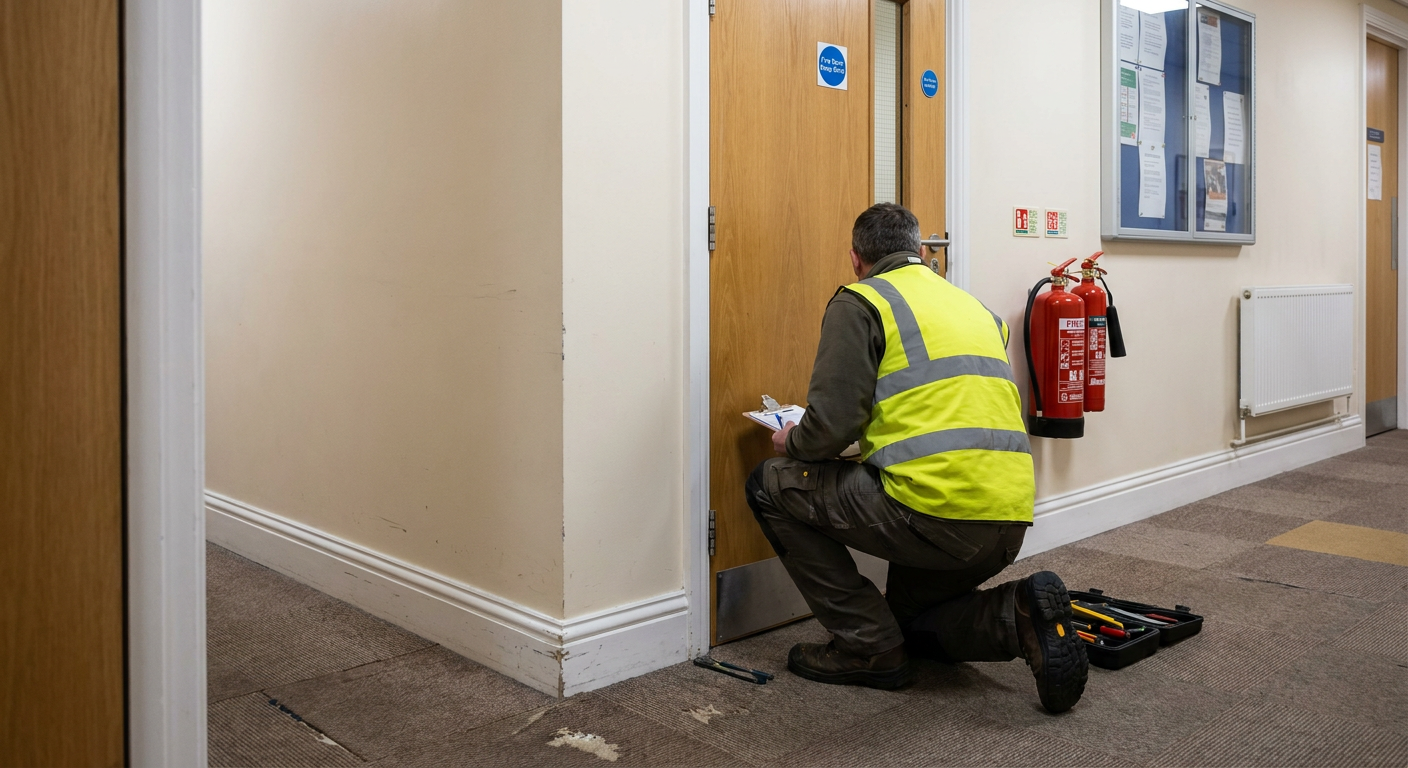
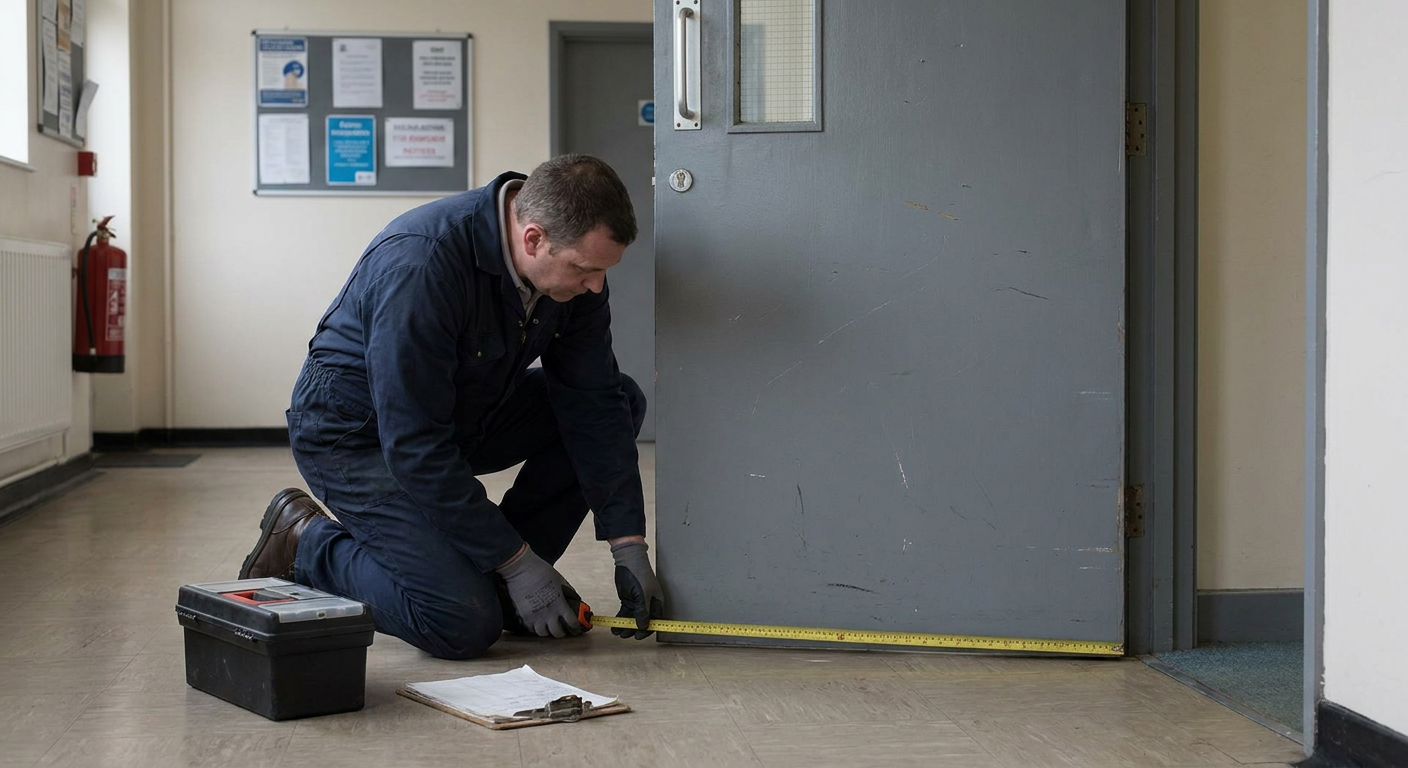
A fire door only works when it closes fully. Hinges sag over months. Intumescent strips shrink or get painted over. Cold smoke seals tear when heavy bins drag past them. None of these faults make noise, so they go unnoticed until someone looks closely.
In blocks of flats, a damaged fire door between a corridor and a stairwell removes the barrier that keeps smoke out of the escape route. Residents might prop doors open for convenience, not realising what that gap allows through during a fire. A specialist firm inspects the frame, the hinges, the glazing and the self-closing mechanism to find where protection has failed. The [fire door inspection page](/checks-and-training/fire-door-inspection-reigate) describes what that check covers.
Communal hallways fill up with shoes, pushchairs and delivery boxes. Every item left in a shared corridor is fuel. It narrows the path people need to walk down in the dark, breathing smoke. Clearing these areas is a constant task for managing agents. Notes on [clutter in communal areas](/journal/clutter-in-communal-areas-of-reigate-blocks-of-flats) explain why enforcement matters.
Kitchens, workshops and hot work
Cooking causes most fires in commercial premises. In cafes and restaurants around Reigate, grease builds up inside extraction ducts faster than staff notice. A pan left on a high flame near an uncleaned filter turns a busy lunch service into an evacuation. The article on [kitchen fire risks](/journal/kitchen-fire-risks-in-reigate-cafes-and-restaurants) walks through ventilation cleaning schedules and suppression systems.
Refurbishment work brings its own hazards. Builders strip out walls, leaving dust everywhere and fire doors wedged open for wheelbarrows. Escape routes disappear behind scaffolding. Managing these temporary risks requires planning before the first hammer swings. Guidance on [fire safety during refurbishment](/journal/fire-safety-during-refurbishment-work-dust-doors-exits) covers what changes while contractors are on site.
Welding, cutting and roofing with a torch produce sparks that travel further than expected. A [hot work permit](/journal/hot-work-permits-in-reigate-welding-cutting-roofing) forces a pause. The contractor checks the area, clears combustibles and assigns someone to watch for smouldering materials after the tool switches off.
Warehouses, holiday lets and shared housing
Stacking stock high in a warehouse reduces the space between goods and sprinkler heads. Racking layouts can block access to exits or hide a small fire until it grows beyond control. Pallets stored against external walls transfer heat inside. The piece on [warehouse fire safety](/journal/warehouse-fire-safety-in-reigate-stock-and-racking) looks at separation distances and aisle widths.
Houses converted into multiple occupation need a specific assessment. Landlords running [HMOs in Reigate](/checks-and-training/hmo-fire-risk-assessment-reigate) must account for several unrelated adults sharing cooking facilities and escape stairs. The risk profile differs from a single family home because occupants do not necessarily look out for each other.
Short-stay guests arrive late, unfamiliar with the layout. They do not know which window opens or where the assembly point is. Providing clear instructions inside a [holiday let](/journal/fire-safety-for-holiday-lets-and-short-stays-in-reigate) takes more thought than sticking a laminated sheet behind the front door. The host carries responsibility for visitors who treat the building like a hotel.
Documents, duties and training
Paperwork does not put out fires. But a written record shows what was considered, what was found and what changed because of it. An employer needs a [fire safety policy](/checks-and-training/fire-safety-policy-and-procedures-reigate) that staff can actually follow. A long document filed away helps no one when the alarm sounds.
The law places duties on a specific individual: the responsible person. For a workplace, that is usually the employer. For a block of flats, it falls to the freeholder or managing agent. Understanding [who holds that duty](/who-needs-what/responsible-person-duties) clarifies who arranges the assessment and who pays for the remedial work.
Staff need to know what to do before a fire starts. [Awareness training](/checks-and-training/fire-safety-awareness-training-reigate) covers alarm recognition, exit routes and the rule against using lifts. Designated wardens receive additional instruction on sweeping areas and reporting to emergency services. Details of [fire warden training](/checks-and-training/fire-warden-training-reigate) set out those extra responsibilities. A specialist firm delivers the sessions on site, tailoring the content to the actual building layout rather than a generic slide deck.
Send an enquiry about your building
Write what you have noticed. The message goes to a local consultant who will reply with whether it needs attention. There is no obligation to book anything.
- No obligation
- Local replies
- Plain advice