Journal article
Warehouse fire safety in Reigate: stock and racking
Stock height, aisle width and racking layout all change how a warehouse fire behaves. Find out what to check around your building so the risks stay manageable and escape routes remain clear.
How racking layout changes fire behaviour
A warehouse stores more fuel per square metre than almost any other building type. The way that fuel is arranged determines how fast a fire grows. Tall racking creates vertical channels. Flames travel up them quickly, reaching the roof before anyone on the ground notices smoke.
The gaps between racks matter as much as their height. Narrow aisles allow radiant heat to jump from one pallet to the next. Wider spacing slows that transfer and gives people more time to leave. A specialist firm carrying out a <a href="/checks-and-training/fire-risk-assessment-reigate">fire risk assessment</a> will measure these distances against the building's actual use rather than relying on generic plans.
Sprinkler heads need clearance to work. Stock stacked too close blocks the water pattern and leaves dry pockets where fire continues to spread. Checking head clearance is a routine part of the walk-through.
Keeping aisles clear for escape
Aisles serve two purposes at once. They let forklifts move stock during normal hours, and they form escape routes when an alarm sounds. These functions conflict every time someone parks a pallet truck in a gangway or stacks returns near a fire exit.
Escape routes in warehouses are longer than in offices because the floor plates are larger. A blocked aisle forces staff to detour through unfamiliar racking bays while visibility drops. A documented <a href="/checks-and-training/fire-evacuation-plans-reigate">evacuation plan</a> maps the primary and secondary paths so everyone knows which direction to walk without stopping to think.
Floor markings help. Painted lines show where stock must not cross. They fade under heavy traffic, so repainting needs to sit on the maintenance schedule rather than waiting until an inspector points out the wear.
Compartmentation inside large units
Warehouses often look like single open boxes, but many contain separate rooms for charging batteries, storing packaging waste or housing plant equipment. Each room should be enclosed by walls and doors that hold back fire long enough for people outside it to evacuate.
Gaps appear over time. Cables routed through walls leave holes around the penetrations. Forklift impacts dent door frames so they no longer close flush against the seal. A <a href="/checks-and-training/compartmentation-survey-reigate">compartmentation survey</a> identifies where fire can bypass these barriers through voids above suspended ceilings or behind cladding.
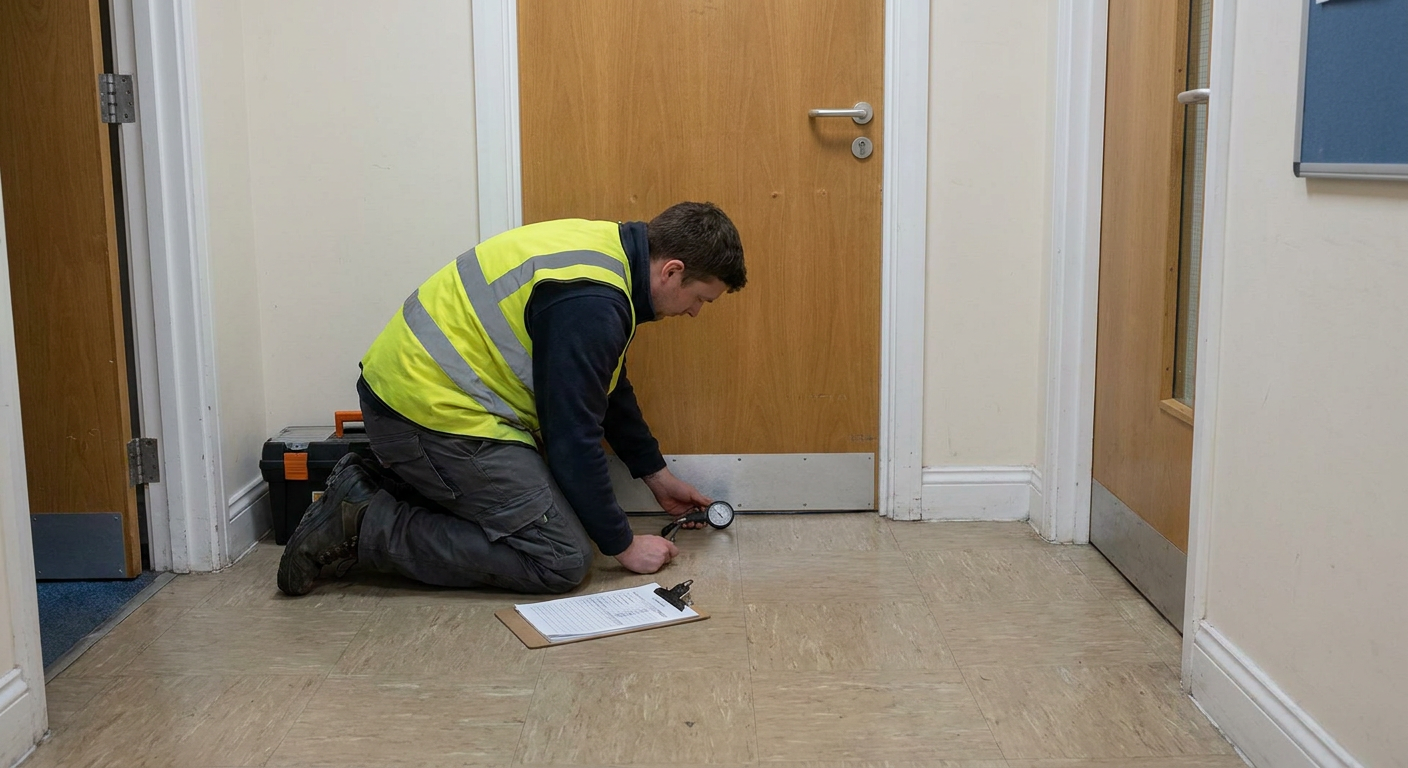
Fire doors on high-traffic routes take constant punishment. Hinges sag, intumescent strips tear away and closers lose tension. Regular <a href="/checks-and-training/fire-door-inspection-reigate">inspection</a> catches wear before the door fails to latch.
Staff awareness and warden duties
Warehouse staff turnover tends to be high, especially around peak trading months. New starters might know how to pick orders but not where the nearest call point sits or why stacking cardboard against a heater is a problem.
Short, focused <a href="/checks-and-training/fire-safety-awareness-training-reigate">awareness training</a> covers those basics. It does not need to take a full shift. Fifteen minutes on routes, alarms and housekeeping rules gives new joiners enough to act sensibly from day one.
Larger sites benefit from designated wardens who sweep their zones during an alarm. <a href="/checks-and-training/fire-warden-training-reigate">Warden training</a> teaches them how to check racking aisles safely without putting themselves at risk, and how to report missing people to the fire service on arrival.
Written policies and regular review
Verbal instructions drift. A written <a href="/checks-and-training/fire-safety-policy-and-procedures-reigate">policy document</a> fixes the standard so managers enforce the same rules on every shift. It sets out who checks escape routes, how often extinguishers are serviced and what happens when a delivery driver blocks a fire exit.
Responsibility must sit with a named individual. The law requires a <a href="/who-needs-what/responsible-person-duties">responsible person</a> to ensure precautions stay in place. In a warehouse shared by several tenants, clarifying who handles common areas prevents gaps where nobody acts.
Buildings change. New racking goes up, product lines switch from tinned goods to aerosols, mezzanine floors get added. Each change alters the fire risk. Reviews should happen after any significant alteration, not only on a calendar cycle. A <a href="/checks-and-training/fire-strategy-reigate">fire strategy</a> ties these updates together, showing how detection, suppression and evacuation work as a single system rather than separate items on a checklist.
Ask about your warehouse fire safety
Send a brief description of the building and how it is used. A specialist firm will read it and explain what applies to your situation. There is no obligation to book anything.
- No commitment required
- Plain advice first
- Local to Reigate