Guide
Fire safety for holiday lets and short stays in Reigate
A short-stay guest does not know the building. Find out what working alarms, a clear way out and plain instructions mean for a holiday let in Reigate, and who carries the legal duty to provide them.
Why a holiday let is different from your own home
When someone stays in their own home, they know where the doors are, how the locks work and which way to turn in the dark. A holiday let removes all of that familiarity. Guests arrive tired, often late, and leave after a few days. They do not know the sound of the alarm or the route to the street.
Because of this, fire risk management in a short-stay property has to do more than meet the minimum standard for a private house. The person responsible for the building must assume the occupant knows nothing about it. That assumption shapes every decision about alarms, escape routes and the information left on the kitchen table.
In Reigate, many holiday lets sit inside older buildings where corridors are narrow and staircases turn sharply. These features matter when someone is trying to leave quickly in smoke. Understanding the specific risks of the building is the starting point, and a <a href="/checks-and-training/fire-risk-assessment-reigate">fire risk assessment</a> records them so the owner knows exactly what needs attention.
Alarms that wake people who are not at home
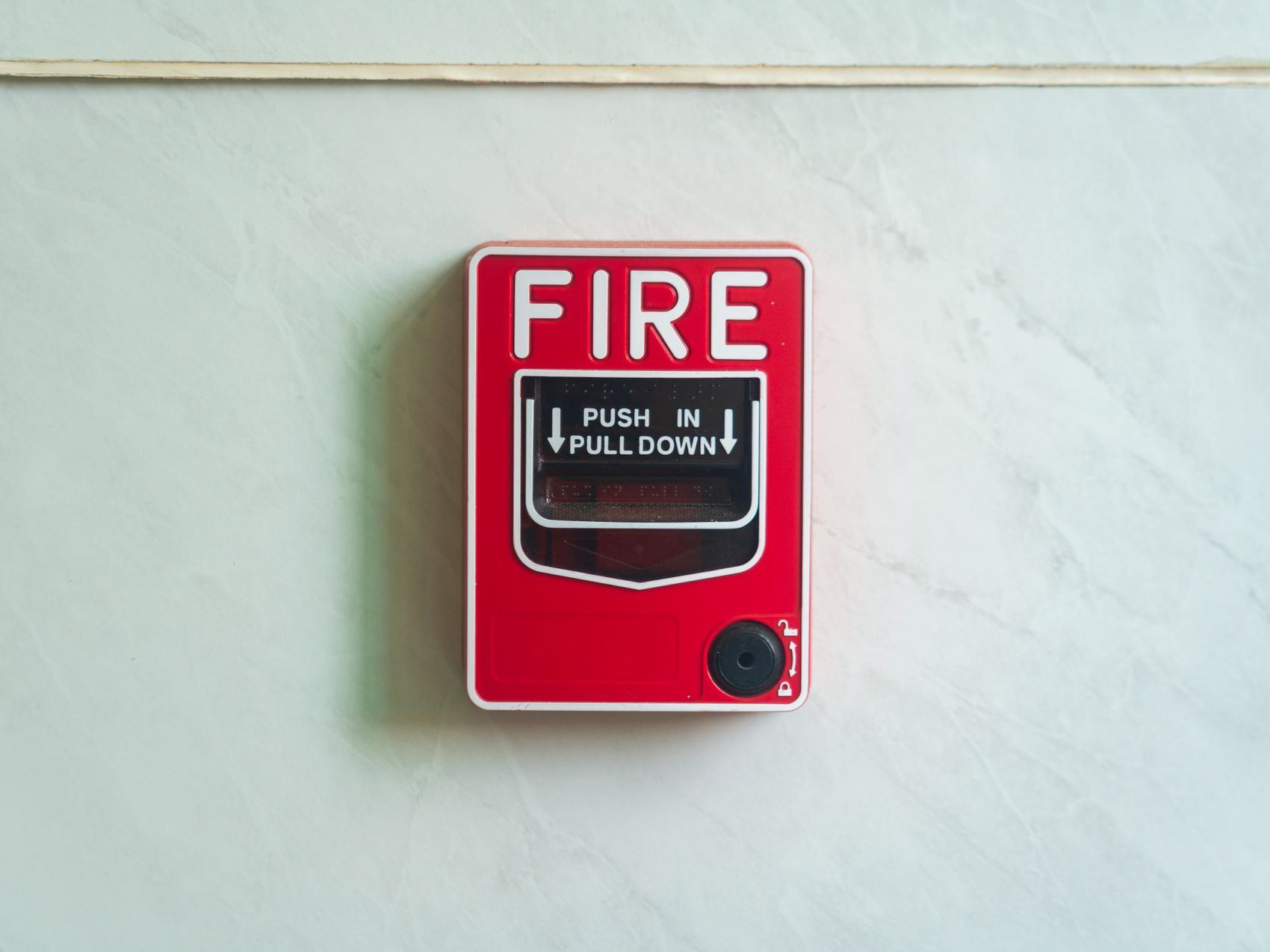
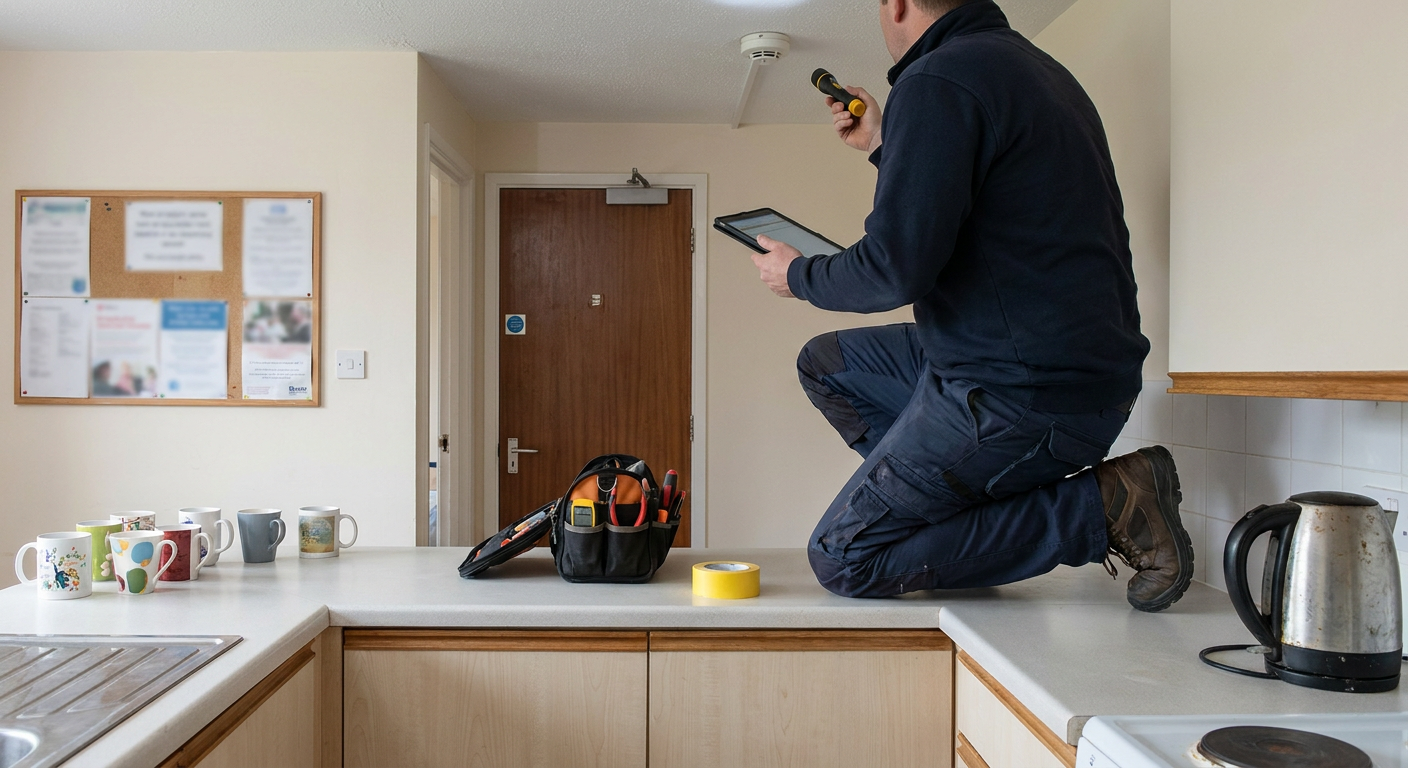
A smoke alarm that works perfectly during the day can fail its only real test at three in the morning. For a holiday let, the alarm must be loud enough to wake a deep sleeper in a room with the door shut. Battery-operated units need a schedule for replacement, and wired systems need periodic checks by a competent person.
Heat alarms belong in kitchens, where cooking smoke would set off a standard detector and cause guests to ignore it next time. Smoke alarms cover the hallways, landings and bedrooms. The exact layout depends on the size of the building and the number of floors.
Testing the system before each new arrival is a practical habit. Some owners include it in the changeover checklist alongside fresh linen. Records of these tests show that the equipment was maintained if anything goes wrong. More detail on keeping alarms reliable is available in the guide to <a href="/journal/weekly-fire-alarm-testing-in-reigate-checks-and-logs">weekly fire alarm testing</a>.
Escape routes guests can use without thinking
An escape route in a holiday let must be obvious to someone who has never walked it before. That means no keys required to open the front door from the inside, no furniture narrowing the hallway and no storage boxes stacked near the exit.
If the let is above a shop or another commercial space, the stairs and landing might be shared. In those cases, the responsibilities overlap between the flat owner and whoever manages the building below. Guidance for <a href="/who-needs-what/flats-above-shops">flats above shops</a> explains how that division works in practice.
Every sleeping room needs a way out that does not rely on passing through another room first. Where a window serves as a secondary escape, it must open far enough for an adult to climb through without tools. The specialist firm carrying out the assessment will measure these openings and check the hardware.
Doors that hold back smoke long enough to leave
A fire door is only useful if it closes fully every time. In short-stay accommodation, doors get propped open for luggage, wedged back for ventilation or left unlatched because the mechanism is stiff. Each of these habits defeats the purpose of the door.
The self-closing device should pull the leaf into the frame without slamming. The intumescent seals around the edges expand under heat to block smoke, but they cannot do that if they are painted over, torn or missing. Hinges need to hold the weight evenly so the door does not drop and catch on the carpet.
A <a href="/checks-and-training/fire-door-inspection-reigate">fire door inspection</a> looks at gaps, seals and hinges individually. The specialist records which doors pass and which need adjustment, giving the owner a clear list of work rather than a vague warning about safety.
Telling guests what to do in plain language
Instructions left for guests should be short, direct and easy to read. A laminated sheet on the back of the front door or beside the bed works better than a paragraph buried in a welcome booklet. Tell them where the exits are, what the alarm sounds like and what number to call.
Avoid jargon. Phrases like "assembly point" or "evacuation strategy" mean little to someone unpacking a suitcase for a weekend away. Say "go outside and wait across the road" instead.
If the building is large enough to need a formal plan, a specialist can produce <a href="/checks-and-training/fire-evacuation-plans-reigate">evacuation plans</a> tailored to the layout. For most single holiday lets, clear written instructions and a working alarm cover what is needed. The key is making sure the guest sees them before they go to sleep.
Who holds the duty when the stay is short
The law places the duty on the responsible person. In a holiday let, that is usually the owner or the managing agent acting on their behalf. Letting the property for money changes it from a private home to a business premises in the eyes of fire safety regulations, even if it only happens for a few weeks each year.
This duty does not disappear when a booking platform handles the payments or a cleaner manages the changeovers. The owner remains accountable for the condition of the building and the safety of anyone sleeping in it.
A full explanation of <a href="/who-needs-what/responsible-person-duties">responsible person duties</a> sets out where liability sits. If the property operates as a house in multiple occupation with separate tenants, the requirements shift again, and a specific <a href="/checks-and-training/hmo-fire-risk-assessment-reigate">HMO assessment</a> applies instead.
Ask about fire safety in your holiday let
Send an enquiry about the property. A specialist firm will respond with what an assessment involves, and there is no obligation to book any work.
- No obligation to proceed
- Local to Reigate
- Plain answers given